
Articles
The Ford Files - "“Let’s Flow!” - October 2024
The Ford Files – Oct. 2024
Let's Flow!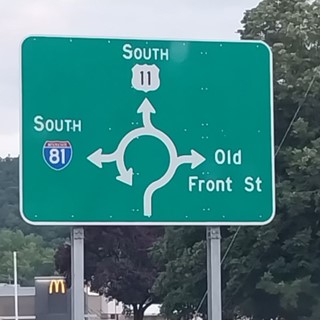
Dear Readers, I’ve lately observed several examples of lean flow, or perhaps more accurately stated as attempts at flow. Concurrent to this are multiple LinkedIn posts lamenting how so many companies fail at lean implementation. I’m wondering how this is possible given that ease and simplicity are fundamental to lean concepts.
One interesting example is the growing push to incorporate more traffic circles into American road infrastructure. Note: it seems public works officials are doing this more as a “fad” or “flavor-of-the-month” as opposed to continuous improvement; we all know how well that works.
Four-way stops and/or traffic signals represent the worst of “hurry up and wait” ala job shop manufacturing, where we push to expedite orders just to have them sit at the next downstream overburdened work center. The intent of roundabouts is to keep moving at a steady constant pace. Unfortunately, too many drivers act in their own self-interest (as opposed to system interest) and speed through these, blocking others from entering. The designers may have unintentionally contributed to this, as I note one local circle with a posted speed limit of 25 mph. That’s way too fast, and as a result this traffic circle has taken on the appearance of a four-way stop because of cars backing up as they are unable to enter. If they set the limit to 5 or 10 mph the flow would actually increase.
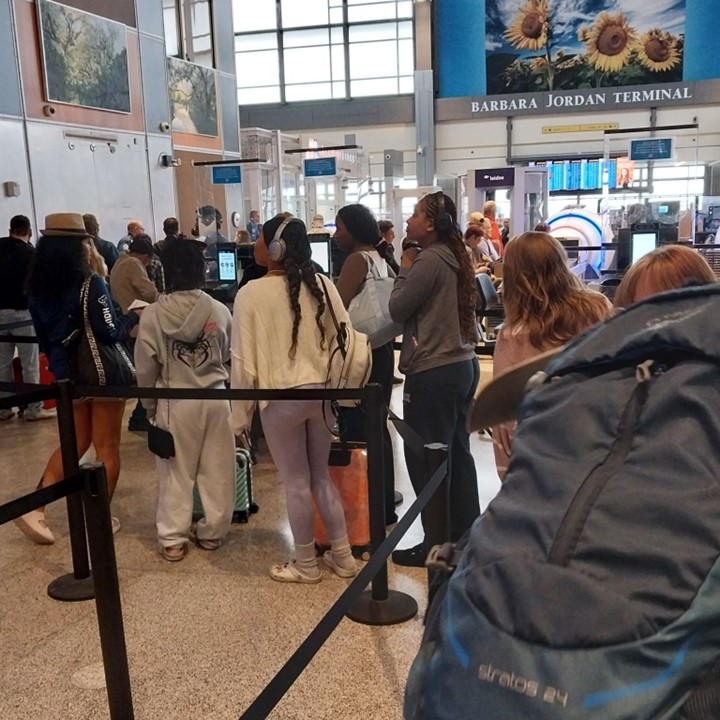
Another example we can all relate to is TSA lines at airports. TSA pre-check was designed to help expedite the situation, although its popularity has resulted in creating a new bottleneck such that the regular line sometimes moves faster. Our friend Joe Shedlawski notes the same thing happening with highway toll lanes that were added to relieve traffic congestion, with the opposite result. Drivers paid a premium to go slower!
One of my lean presentations is “Lifelong Lean Lessons Learned Long Ago” in which I describe five examples that I didn’t recognize at the time as lean, in fact most were before I’d ever heard of the term.
· Bicycle trip shopping for groceries (minimize transport!). I was in junior high school and realized that rather than ride back-and-forth to each of three stores, I did a loop and made only one trip. I still do this today when running errands, and shippers use transportation management systems (TMS) to create efficient routes for drivers.
· A college internship with a Tier 1 automotive supplier (component commonality!) My suggestion was to build standardized components rather than make them different for every single model and year vehicle. They sneered “Mike, that’s not how we do it here! We don’t tell our customers how to design their cars!” Years later, I recognize this as component commonality, supplier involvement in design, setup reduction, and concurrent engineering.
· Working as a grocery clerk in the express lane (small lots facilitate flow!) I used to work nights stocking shelves in a grocery store. On Thanksgiving I was asked to fill in on day shift as a cashier. I should have been suspicious when I was offered the express lane. Holy smokes, that was the epitome of flow, lots of folks just buying 1-2 items. No bagging, cash only (no checks), just pushing orders through. The express lane registered more sales than any other lane.
· Order-picking in a grocery warehouse (minimize handling!) I was working as a warehouseman and figured out an improvement that allowed us to reduce handling on staged orders, while simultaneously improving order accuracy. Notably several long-time employees didn’t like they new process, even as they acknowledged the improvements. Resistance to change is powerful.
· Managing a location database at a global parts distribution facility (reduce process steps!) While working on inventory control at a global electronics distributor I was processing data entry for item location change. I realized there were extra unnecessary steps, and streamlined the process to less keystrokes. As in the above example, coworkers got mad at me!
Here’s to hoping we can identify easy-to-implement lean improvements in both our professional and personal lives to ultimately flow through life.
Yours in ASCM,
Ford
Ford is here to help. If you have any follow up questions or comments, or if you or your company are facing any unresolved challenges, feel free to drop me a note at [email protected]
 ASCM is an unbiased partner, connecting companies around the world with industry experts, frameworks and global standards to transform supply chains.